Ideologies
The most central notion of Romanticism, that which unified so many disperse styles and themes, was the originality of the artist (Galitz, 2004). Romanticism revolutionized the creative process by ascribing the highest value to an individual’s personal and imaginative reaction to the world around them. Romantic artists asserted the human imagination was at its best when left unchecked. The individuality of each artist as a creative and expressive personality was more important than adhering to a homogenous visual style, and emotional expression was paramount (Linduff et al., 2005).
A result of the romantic esteem for the heroic individual and artist was that individual imagination became the critical authority. Such a doctrine liberated Romanticism from classical notions of form, and thus allowed free expression to coalesce as a definitive quality in Romantic art (Wikipedia, 2012).
One facet of artists’ emphasis on the individual and subjective rather than the rationalism of the eighteenth century is exhibited in the portraiture of the period. Portraits were traditionally a utilitarian record of individual appearance, but painted by the brush of a Romantic artist, they expressed a range of psychological and emotional states (Galitz, 2004).
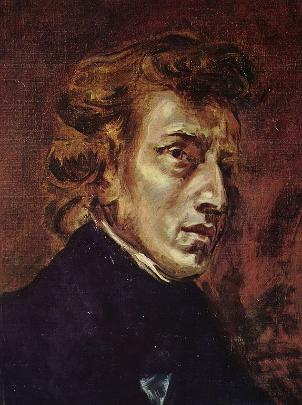 Frédéric Chopin, by Eugène Delacroix, 1838 | 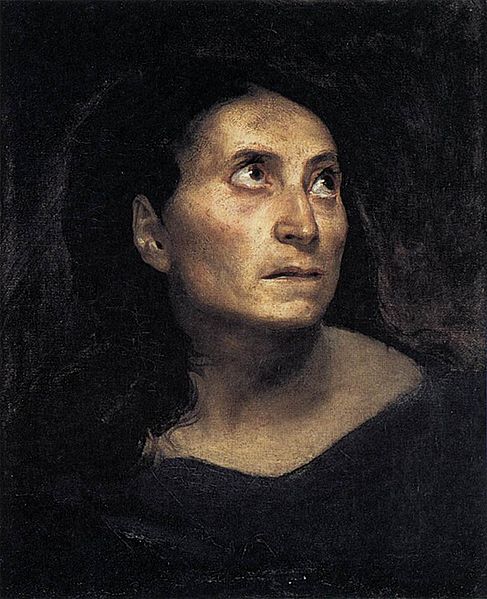 Head of a Woman by Eugène Delacroix, 1823 |
