Technique and Media
Romantic artists rejected the goal of photographic accuracy, instead emphasizing imagination and emotion. They idealized color as a powerfully communicative element of art. Romanticism held a high regard for observation, both relaxed, contemplative reflection and keen examination. The Romantic tradition of observation, along with artists’ acute awareness of color, created compelling artistic expression. Such emphasis on observation and color contributed to significant achievements in painting (Vogt, 1973).
Paint was the preferred medium of Romantic artists. While there exists some sculpture from the period, painting was generally favored because artists disliked the inexpressive nature of sculpture and its affiliation with Neoclassicism (Vogt, 1973). Artists had a particular distaste for marble because it was not conducive to expansive gestures. They found marble’s lack of color cold and uninspiring (Wikipedia, 2012). Vogt (1973) noted that Romantics delighted in painting “shadowy depths and twilight moods,” which sculpture was unable convey (p. 87). The sculpture that was produced during the period focused on transformation and metamorphosis (Vogt, 1973).
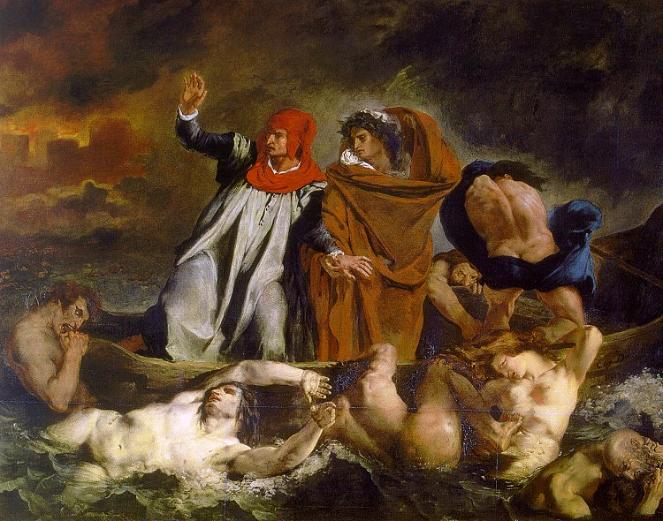
Dante and Virgil in Hell by Eugène Delacroix, 1822
